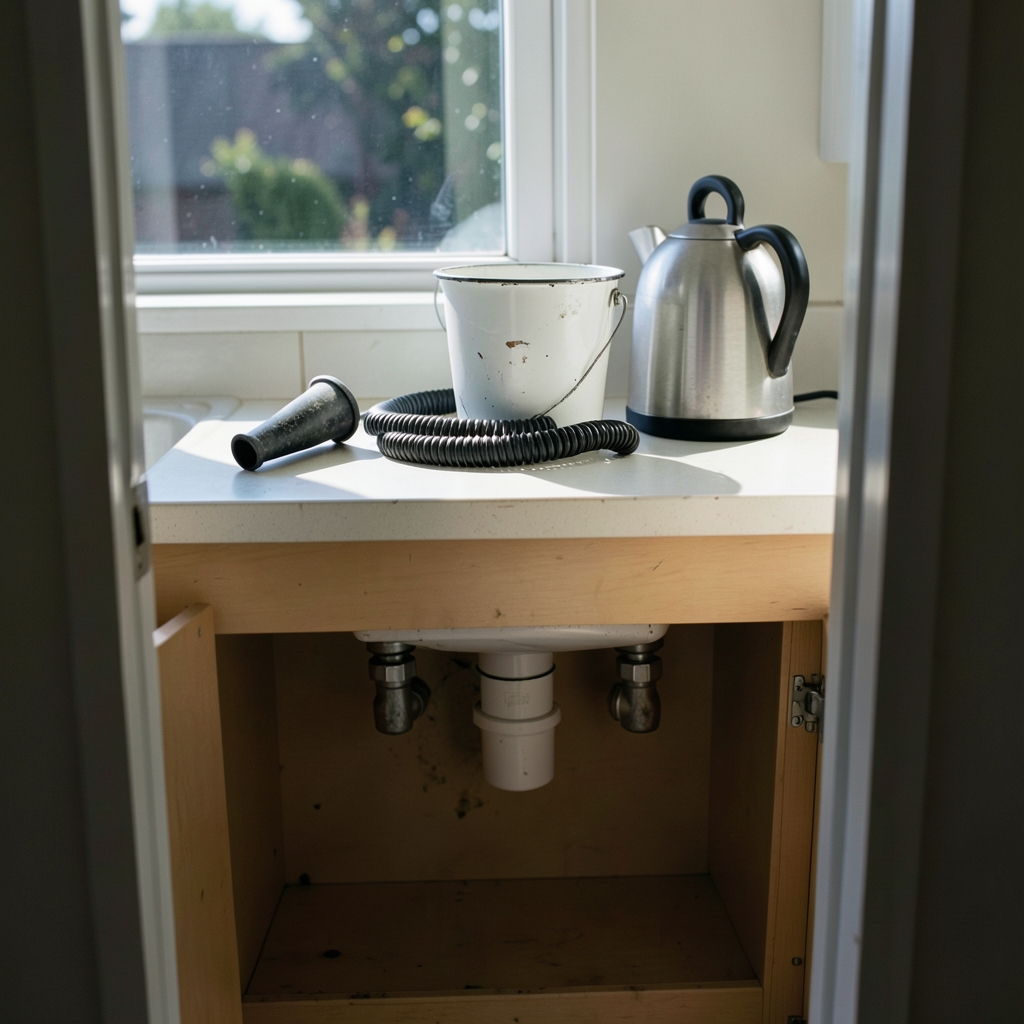
What if the fastest way to clear a blocked kitchen drain is also the safest one for pipes, skin, and indoor air? Mechanical clearing, careful heat, and a few well-placed tools handle most kitchen clogs without a drop of caustic cleaner. This article gives a step-by-step method for unclogging a kitchen sink without chemicals, plus prevention habits that keep the drain flowing.
Why Skip Chemical Drain Cleaners?
Chemical drain cleaners are among the harshest products under a kitchen sink. Caustic formulas can burn skin and eyes on contact and pose serious risks if splashed or swallowed. Mixing them with other cleaning products can release hazardous gases, and a splash during later work on the same drain is a genuine hazard. Many municipal water systems also discourage sending aggressive chemicals into household plumbing.
There is a practical angle as well. Chemical cleaners often struggle against the most common kitchen clog: congealed grease combined with food scraps. The liquid may channel through the blockage without clearing it, leaving a partial clog that returns within days. Mechanical methods address the clog directly, and that is where a sensible plan starts.
Mechanical clearing is the standard non-chemical approach: a plunger and a drain snake are the two core tools, and household guidance favors them over chemical cleaners.
Start With Diagnostics: Find the Clog Before You Fix It
Before reaching for a tool, take a moment to understand the problem. A few quick diagnostics save time and prevent damage.
Check how many drains are slow
If only the kitchen sink drains slowly, the clog is likely local, sitting in the trap or the short run of pipe behind the wall. If several fixtures drain slowly at once, or water backs up elsewhere when the sink runs, the blockage may be in a main line. That situation calls for a plumber rather than a DIY attempt.
Note what went down the drain
Grease, coffee grounds, rice, eggshells, and fibrous vegetable scraps are frequent culprits. Knowing what caused the clog helps determine whether hot water, a plunger, or a snake is the right first move.
Look under the sink
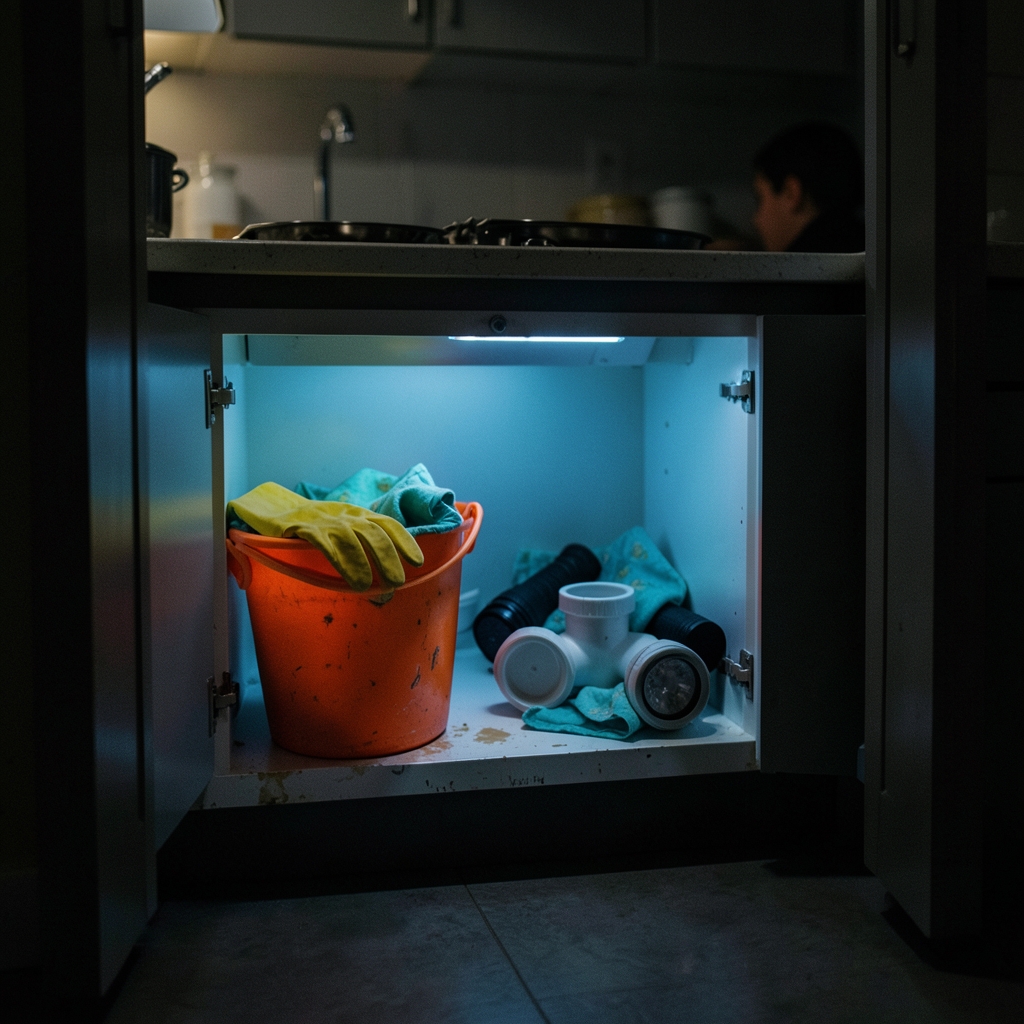
A bucket, a flashlight, and a quick inspection of the trap and connections reveal leaks, corrosion, or a trap that is easy to remove. This simple check is the foundation of accurate diagnostics and prevents surprises later.
Method 1: The Plunger, Used Correctly
A plunger works by pressure, not chemistry. The cup creates a seal over the drain, and vigorous strokes push water back and forth to dislodge the clog.
- Remove the strainer or basket so the plunger can seal directly on the drain opening.
- For a double sink, seal the second drain with a wet rag or a stopper. Otherwise, the pressure escapes through the open side instead of driving down the clogged line.
- Add enough water to cover the plunger cup.
- Seat the cup firmly and plunge with short, forceful strokes, keeping the seal intact.
- Repeat for 15 to 20 strokes, then check whether the water drains.
The most common mistake is using a flat cup on a drain it cannot seal, or plunging with too little water. A proper seal and a full cup of water make the difference between a cleared drain and a wasted ten minutes.
Method 2: Hot Water and Dish Soap for Grease
Grease and fat congealed in the pipe are a leading cause of kitchen sink clogs. A hot water flush with dish soap is a reasonable first attempt for a slow drain that still passes some water.
- Pour a generous squeeze of dish soap into the drain.
- Follow with a pot of hot, not boiling, water.
- Wait several minutes, then flush with more hot water.
A caution matters here: boiling water can damage PVC pipes and older plumbing, so keep the water hot rather than at a rolling boil. This method works best on light grease buildup and is unlikely to clear a solid blockage. Used early, though, it can prevent a slow drain from becoming a full clog.
Method 3: Baking Soda and Vinegar, With Realistic Expectations
The baking soda and vinegar remedy is widely repeated, and the fizzing is real: sodium bicarbonate reacts with acetic acid to release carbon dioxide. What the bubbles do not do is reliably clear a solid clog. The reaction is a well-established piece of chemistry, but its effectiveness as a drain-clearing method is not backed by controlled testing.
Treat it as a low-effort step for light buildup, not a solution for standing water. Pour half a cup of baking soda down the drain, follow with a cup of white vinegar, let it sit for 15 minutes, and flush with hot water. If the drain still runs slowly, move on to mechanical methods.
The fizzing of baking soda and vinegar is a genuine acid–base reaction, but it is unlikely to clear a solid clog; treat it as low-efficacy folklore rather than a fix.
Method 4: Check and Clean the P-Trap
Most kitchen sink clogs sit in the trap or the tailpiece directly above it. The P-trap, the curved section of pipe beneath the sink, holds a small amount of water to block sewer gases, and it also catches debris. Removing it is a common non-chemical fix.
- Place a bucket under the trap and put on gloves and eye protection.
- Unscrew the slip nuts on both sides of the trap by hand or with slip-joint pliers.
- Remove the trap and empty it into the bucket.
- Clean the inside with a bottle brush or a rag, and check the tailpiece above for debris.
- Reassemble the trap, hand-tighten the nuts, and run water to check for leaks.
This step resolves a surprising share of kitchen clogs on its own. The most frequent mistake is overtightening the slip nuts, which can crack plastic fittings. Hand-tight plus a quarter turn is enough.
Method 5: A Drain Snake for Stubborn Clogs
When a plunger and a trap cleaning fail, a hand auger, also called a drain snake, reaches clogs farther down the line. A 15 to 25 foot hand auger is typical for kitchen traps and branch lines, though recommendations vary by source, so treat the length as general guidance rather than a fixed standard.
- Remove the strainer and, if possible, the trap so the snake can enter the pipe directly.
- Feed the cable in gently and crank clockwise when you meet resistance.
- Work through the clog rather than forcing the cable, and pull it back slowly to bring debris with it.
- Flush with hot water once the cable is out.
Never use a snake in a drain that has just been treated with a chemical cleaner, since the cable can splash the product back toward you. Gloves and eye protection are basic precautions for this job.
A Quick Comparison of Non-Chemical Methods
| Method | Best For | Effort | Limits |
|---|---|---|---|
| Plunger | Loose clogs near the drain opening | Low | Needs a good seal; weak on deep grease |
| Hot water and dish soap | Light grease buildup | Low | Will not clear a solid blockage |
| Baking soda and vinegar | Very light buildup | Low | Not validated for real clogs |
| P-trap cleaning | Clogs in the trap or tailpiece | Moderate | Requires basic tools and a bucket |
| Drain snake | Clogs deeper in the branch line | Moderate to high | Needs care to avoid pipe damage |
Safety Basics for Any Drain Job
Gloves and eye protection belong on the list for every method beyond a simple hot water flush. Open traps can release dirty water, and snaking a drain can splash debris. Keep a bucket and old towels on hand, and never combine chemical cleaners with mechanical work. If a drain has already been treated with a caustic product, flush it thoroughly with water and let it sit before doing anything else.
Preventing the Next Clog
Prevention is the most reliable way to keep a kitchen sink flowing, and it costs very little.
- Use a drain strainer to catch food scraps before they enter the pipe.
- Keep fats, oils, and grease out of the sink. Pour cooled grease into a container and dispose of it with solid waste.
- Run cold water while using the disposal and for 15 seconds after, so scraps flush through rather than settling.
- Scrape plates before washing rather than rinsing food down the drain.
- Flush with hot water weekly to keep light grease moving.
Many municipal water utilities publish guidance on keeping fats, oils, and grease out of drains, and the same habits that protect household pipes also reduce strain on sewer systems. Readers interested in broader household sustainability practices may find related material on start composting at home for healthier soil and less kitchen waste, since many of the same kitchen habits apply.
When to Call a Plumber
Some clogs exceed the scope of home tools. Call a professional when:
- The clog returns within days despite thorough clearing.
- Multiple drains in the home are slow at the same time.
- Water backs up into other fixtures when the kitchen sink runs.
- Sewage odors or backups appear.
- The pipes are old, corroded, or have known damage.
These signs point to a main-line problem that a hand auger cannot reach. Prompt professional attention prevents water damage and larger repairs.
Keeping Your Connection Running Smoothly
A well-maintained home runs on good habits, and the same principle applies to the digital side of the household. Just as regular diagnostics keep a kitchen drain flowing, routine checks keep a home network running well. Our platform provides tools to measure internet speed and performance accurately, with advanced diagnostics that turn raw numbers into useful connection insights. Tracking speed history over time reveals patterns in connection stability, much as a drain log reveals recurring clogs. For a closer look at how everyday systems benefit from steady monitoring, our overview of photosynthesis cellular mechanisms and their global role shows how small, measurable processes add up to large-scale results. Readers who want more practical guides can browse our featured articles for additional household and performance insights.
Key Takeaways
- Mechanical methods, especially a plunger and a drain snake, clear most kitchen clogs without chemicals.
- The P-trap is the first place to check, since most kitchen clogs sit there or in the tailpiece.
- Hot water and dish soap help with grease, but boiling water can damage PVC and older pipes.
- Baking soda and vinegar fizz impressively but are not a validated fix for solid clogs.
- Chemical drain cleaners carry real burn and fume hazards and complicate later mechanical work.
- Persistent clogs, multiple slow drains, or backups call for a plumber.
Frequently Asked Questions
Can I unclog a kitchen sink without any tools?
In some cases, yes. Hot water with dish soap can clear light grease buildup, and a baking soda and vinegar flush may loosen minor debris. For a genuine clog, though, a plunger or a drain snake is the tool that does the work. A bucket and gloves make every method safer and cleaner.
Is boiling water safe for kitchen pipes?
Hot water is safer than boiling water. Boiling water can soften or damage PVC pipes and stress older plumbing, especially at joints. Use hot tap water or water that has cooled slightly from a boil, and avoid repeated boiling flushes on plastic pipes.
How do I know if the clog is in the P-trap?
If the sink drains slowly or not at all but other fixtures in the home are fine, the clog is likely in the trap or tailpiece. Removing the trap with a bucket underneath usually confirms it, since debris is often visible inside the curve. If the trap is clear, the clog sits farther down the line.
What should I do if the plunger does not work?
Move to a drain snake. A hand auger reaches clogs beyond the trap and into the branch line. Feed the cable gently, crank clockwise, and pull it back slowly. If the snake meets firm resistance or the clog returns quickly, call a plumber.
Are chemical drain cleaners ever a good idea?
They carry documented burn and fume hazards, and they can make later mechanical work dangerous. Caustic cleaners also struggle against grease clogs and may only open a channel through the blockage. Non-chemical methods are safer for people and pipes, and they address the clog directly.
How can I stop my kitchen sink from clogging again?
Use a strainer, keep grease out of the drain, scrape plates before washing, and flush with hot water weekly. Run water while using the disposal and for a short time afterward. These habits prevent most kitchen clogs before they start.
Leave a Reply
You must be logged in to post a comment.